Fostering Positive Bonds Between Young Siblings
As parents of children close in age, fostering a positive bond between siblings is essential. We’ll dive deep into the dynamics of young sibling relationships. Learn how to handle rivalry, promote shared play, and what to do when your toddlers are fighting over your attention and want to sit on your lap.
Drawing from both educational theories and real-life anecdotes, this episode offers a roadmap to nurturing harmony in a bustling household.
Listen to the Podcast here or keep reading this blog post…
The Dynamics of Young Sibling Relationships

Young siblings have a unique bond. They share the same home, often the same toys, and sometimes even the same clothes. While these commonalities can create a strong foundation for friendship, they can also be the breeding ground for rivalry and conflict.
In educational theory, this is often explained through the lens of resource scarcity. Simply put, when both kids want the same toy or the same amount of parental attention, conflict can arise.
Are your toddlers pushing each other over your attention?
Are they manipulating the situation so the other toddler gets left out?
Tackling Sibling Rivalry
Let’s face it; sibling rivalry is almost inevitable. But how you handle it as a parent can make all the difference.
First we need to understand rivalry and what the dynamics are.
We can see sibling rivalry in young twins, even around the age of 3. Here are some journal articles and studies the make for an insightful read:
-Alemu, Robel et al. “Sibling rivalry between twins in utero and childhood: Evidence from birthweight and survival of 95 919 twin pairs in 72 low- and middle-income countries.”
-Segal, H., & Knafo-Noam, A. (2021). “Side by side”: Development of twin relationship dimensions from early to middle childhood and the role of zygosity and parenting.”
-Knafo, Ariel and Segal Noam, Hila. “Twin rivalry in childhood,” from the book “The psychology of rivalry.”
What to do when siblings aren’t getting along?
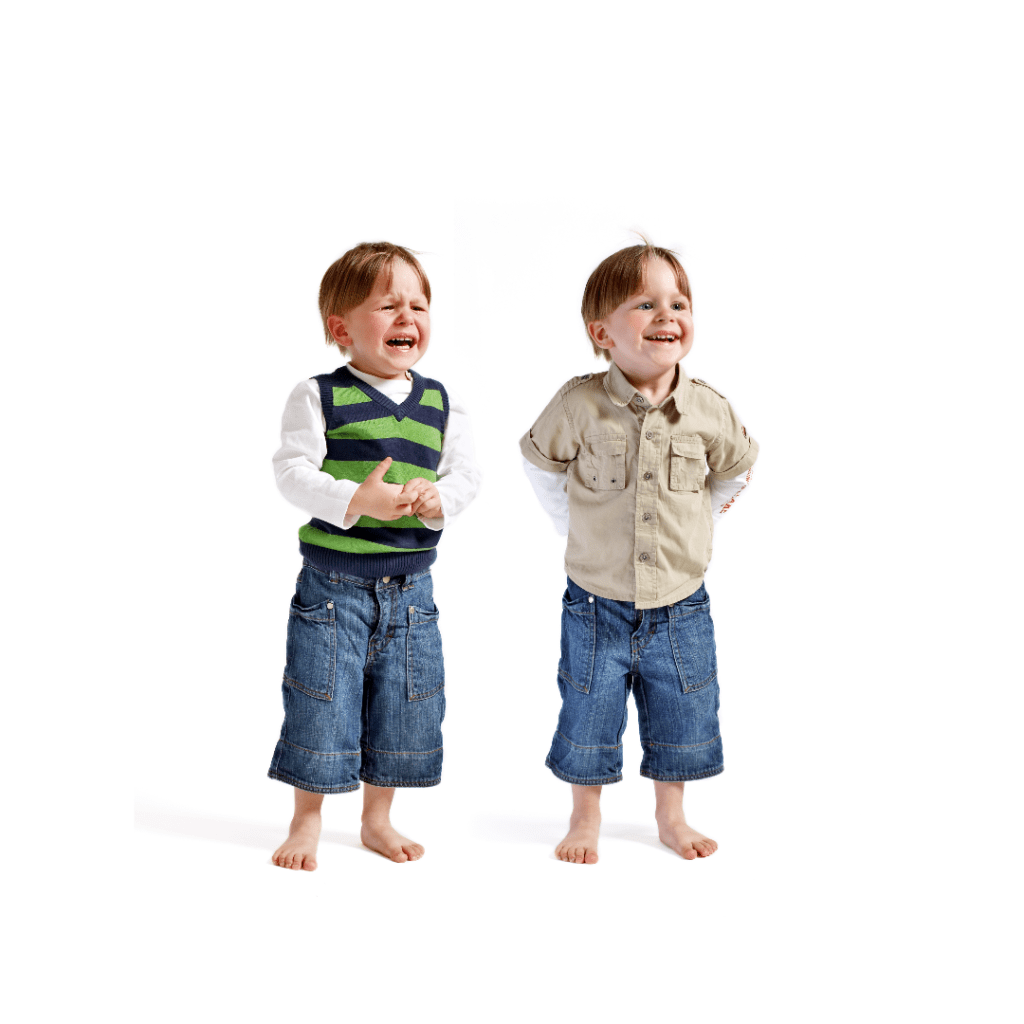
Validating “I see you feel left out” but we need more tools…This is not enough, even though so many social media posts are bosting that validating is the “end all, be all”…but we need MORE in our toolbox.
Sibling Rivalry can include calculated behavior or manipulating a certain outcome.
It’s not just seen in twins, sometimes this can happen when we introduce a new sibling into the family.
EXAMPLE: Toddler pushed their sibling so they cry and they get removed from the activity.
EXAMPLE: Toddler starts mimicking behavior of baby to gain attention.
Encouraging Shared Playtime
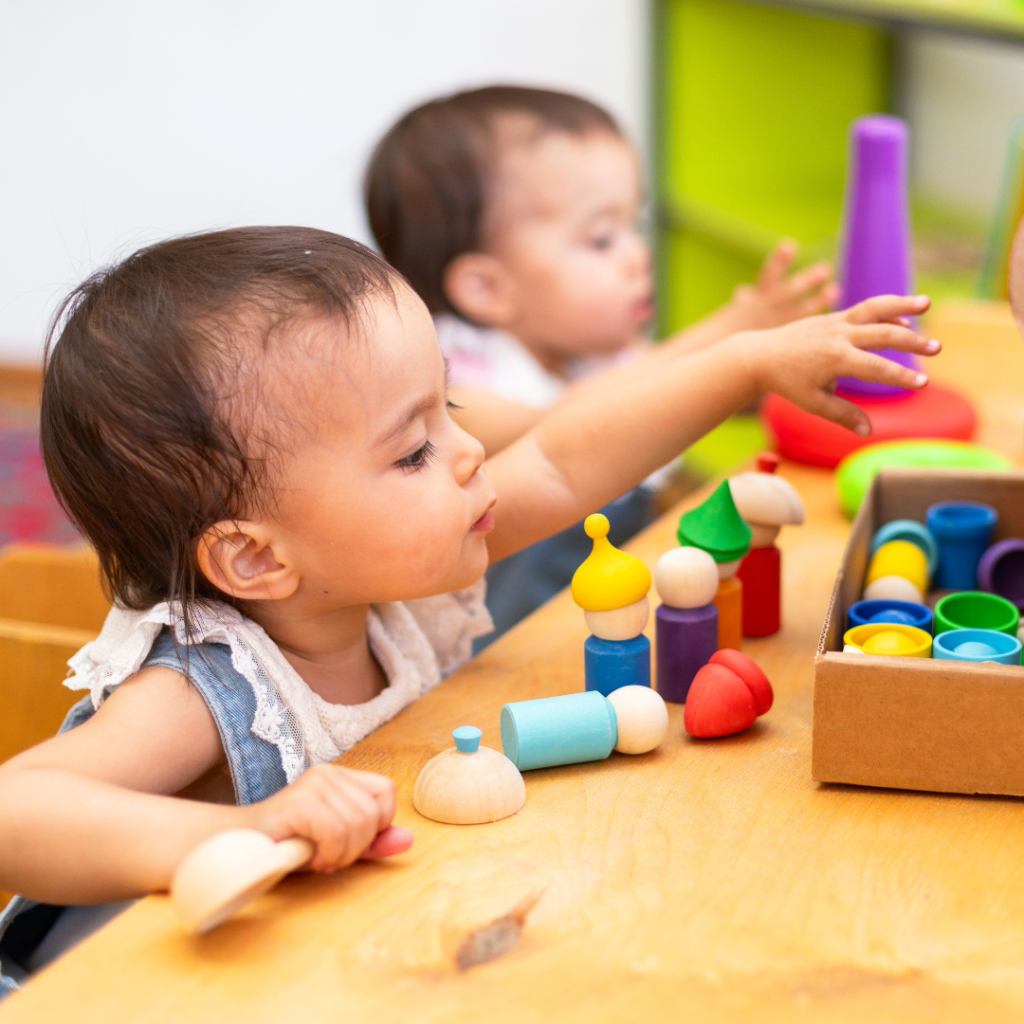
Shared playtime isn’t just fun; it’s an educational experience that teaches kids about cooperation and sharing.
A lot of self-regulation skills are worked on during play-time.
You can promote this by setting up play scenarios that require teamwork. Sharing doesn’t have to be just “sharing” 1 toy.
TEAMWORK AND GROUP GAMES
– puzzle games
-car ramp
-building blocks
-toy piggy bank w/coins
-rolling beach balls
-bean bag toss
-ball and hoop
-red light, green light (take turns on who calls the color)
MAKE SURE TO INCLUDE
-1:1 time with each child
Shared achievements and challenges build a strong sibling bond but there is also a need for 1:1 time and attention.
Real-Life Anecdote
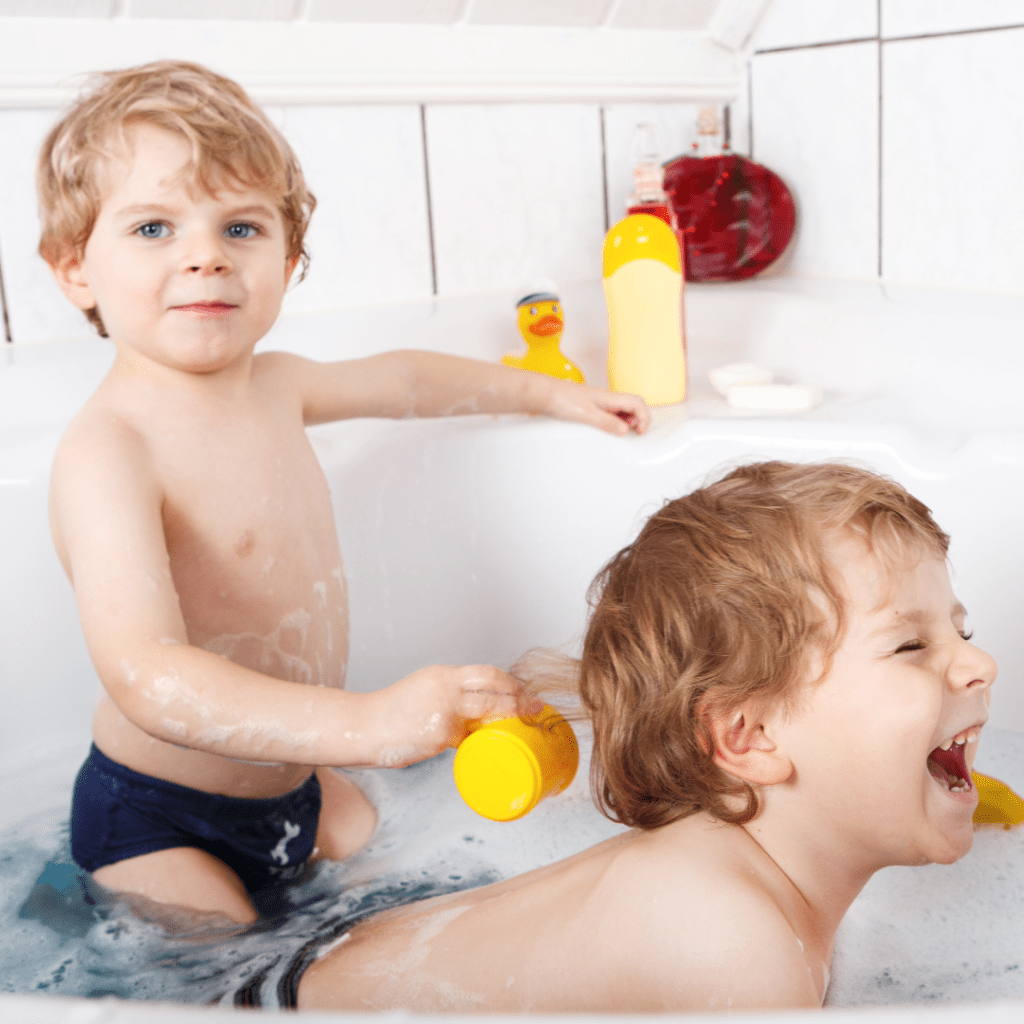
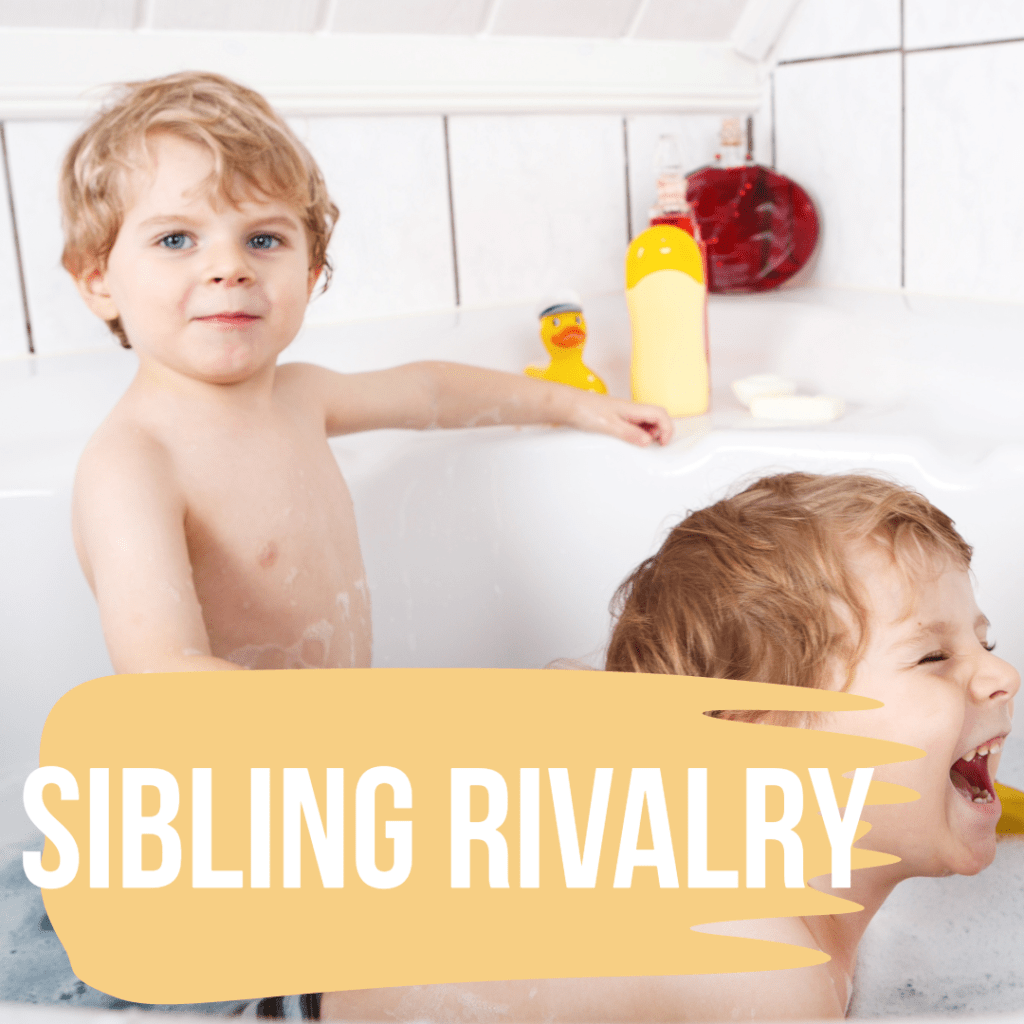
When one twin was always forced to get out of bathtub first because his brother pushed him and he cried. The ‘pusher’ got to stay in the tub.
We started “turn taking” on who gets out of the bath tub first. This was never a problem before, the boys used to volunteer to get out. If one toddler ‘pushed’, they got removed from the tub first as a consequence to not reinforce ‘pushing’ and it’s outcome.
Work on turn taking skills proactively during play-time.
A common Issue: Twins fighting over mom
Co-Regulation with 2 is challenging. Especially when your toddlers are not feeling well and they seek affection. This is where we can work on “sharing”.
-Teaching not just “turn taking skills” but “sharing skills” is also really important.
Building a Lifelong Friendship
What we ultimately want as parents is for our kids to not just tolerate each other but to be friends for life. To build this lifelong friendship, set aside time for family bonding and also allow for individuality within the sibling relationship. Encourage them to celebrate each other’s successes and be a support system for each other. Trust me, it’ll be worth it in the long run.
If this feels overwhelming, I highly recommend you get my simple guide, 3 Steps to Less Meltdowns to get you started off on a more clear path. If you seek more direction and organization, then I highly recommend Meltdown Mastery: The Listening and Skilled Toddler Mini-Course where I go over easy methods to add to your parenting toolkit that work quick and you can implement right away.

~Heather
Twin Mama, Teacher for 10 years, Behavioral Expert & Parenting Coach, M.Ed.
 Toddler Toolkit