Finding the “Why” Behind the Behavior
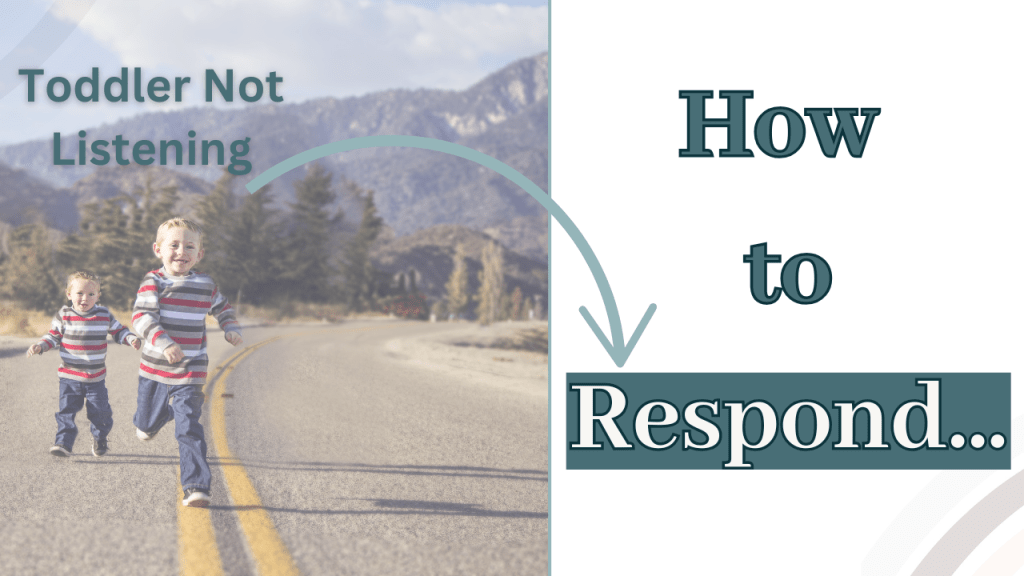
Imagine that you are trying to leave the house with your toddler and get to an appointment on time, but your toddler is refusing to have anything to do with shoes. Or maybe as soon as you make it out the front door, instead of walking to the car your toddler makes a bee line for the street.
These struggles are an all-too-common reality for toddler parents and the big question we are often left with is “why?” Heather tackles this question, unraveling the complex “whys” behind these two behaviors to help parents find simple solutions that actually get to the root of the problem.
**Listen to the full podcast episode here, or read on for the insights!
When Toddlers Refuse to Put On Shoes
A toddler refusing to put on shoes can play out differently depending on the situation. Maybe your toddler usually puts his shoes on by himself but is refusing to do it without help. Maybe your toddler usually needs you to put her shoes on but now she is in all out shoe rebellion, refusing to let you put them on at all. Maybe your toddler is actively running away, kicking his feet, or trying to take off the shoes you just put on.
In the moment we might be tempted to use quick fix strategies like bribery or ultimatums, but if we want to crack the code of our toddler behavior and not have these struggles continue we need to dig deeper and find out what is really going on under the surface so we can apply a real long term solution.
For the many different ways toddlers can refuse their shoes, there are just as many different reasons for why toddlers refuse their shoes. Because of this variation, one blanket solution just won’t work in all scenarios. We need strategies that take each unique root cause into the equation so that we can find a solution that is effective and that also meets our toddlers needs.
Common Why’s for the Shoe Dilemma
- Transition issue: If putting on shoes is a transition issue, then the problem is not really the shoes themselves. Young children often struggle with transitions, but a simple heads up or countdown can help them prepare to stop one thing to do another. If your toddler was doing something else that they preferred doing, like playing with their toys, and have to stop to put on shoes and get out the door, they are going to resist because they don’t want to stop playing. Using a consistent getting ready routine and visual reminders, like a visual timer, can help as well.
- Needing help: Our toddler’s motor skills and ability to do tasks independently is still developing, so they may not want to put on shoes by themselves because it is difficult for them. Maybe your toddler can put on shoes by themselves sometimes, but other times they need your support. Maybe they struggle with the tongue of the shoe or getting their heel all the way in. Because toddlers sometimes don’t know how to ask for help in moments of struggle, they just avoid the struggle all together. This is why working on the skill of asking for help is so important. If a toddler doesn’t know how to ask for help they might throw their shoes or cry and whine in frustration.
- Discomfort: Sometimes the problem is the shoe itself. If something about the shoe is making your toddler’s foot uncomfortable that can lead to shoe refusal. Maybe the shoe is too tight because they have grown to the next shoe size. Maybe something is pinching or caught. Always check the fit of shoes because toddlers do grow so fast.
- Your toddler is not feeling well: If we are not feeling well, we often want to take things off of our plates, making things as easy for us as possible. Toddlers are the same way, but they don’t have the ability to articulate their deeper needs the way we do. We often have the same standards for our toddler whether they feel well or not, but it’s important to break things down into smaller expectations so they can have smaller wins, especially if they aren’t feeling well.
- Non-compliance issue: Toddlers are developmentally wired to want more independence and autonomy. We can meet this need by giving them choices within our greater boundaries so they have some sense of control over their own lives. Maybe you can give them the choice of which shoes to wear, where to put the shoes on, or if they want to do it themselves or want you to help them. Giving toddlers these types of limited choices encourages cooperation because they can participate in decisions, making their voices heard.
When Toddlers Run into the Street
When my firstborn entered the toddler stage running into the street was a real struggle for him and a real issue for me as I was very pregnant with his brother and unable to run after him. As a first time mom, I was puzzled by the draw that the street seemed to have on my young toddler, but after having seen the progression of toddlerhood he and his brothers have gone through, I now understand that so much of this struggle is developmental.
Understanding the “Why”
Heather identifies a few of these developmental “whys” behind this particular behavior struggle.
- Our toddlers are very curious: Toddlers are just beginning to explore the world around them and are interested in new experiences. They are naturally drawn to the pavement because it is different than what they see around them most of the time.
- Toddlers are starting to test boundaries and understand rules: When toddlers test boundaries they are often looking for our reaction and trying to see where the line really is. If our toddlers get a big reaction out of us, even if it is negative, they can find that funny and that reaction can actually make doing that behavior again more enticing.
- Lack of risk awareness: Toddlers do not have a fully developed understanding of danger like adults do. They often do not see that the road is not safe because they do not have the life experience to predict what could happen when a car comes by.
What Can We Do?
Saying “No!” and physically stopping them is usually our first response, which is understandable and sometimes necessary when it is a safety issue like running into the street. As Heather says, safety always comes before methods. But this big reaction can actually fuel the behavior more OR be completely ignored if overused, so we want to have other proactive strategies that we can pull out to address this issue.
- Empowering decisions: Depending on our toddler’s age, we can offer them a choice to help them cooperate with us and stay safe when around the street. We can say, “Do you want to hold my hand or go in the stroller to cross the street?”
- Modeling a consistent routine: When near the street, it is always a good idea to consistently narrate the steps to being street safe. Every time you go to cross the street with your toddler, you can tell them how you always stop, look both ways, hold mom’s hand, and then cross.
- Tailor strategies by age: Because this struggle of running in the street is closely tied to where toddlers are developmentally, we need to be aware that some strategies will work better for young toddlers and others will work better for older toddlers.
- Between 12 and 24 months: Toddlers at this age really need to be kept close and may need to be contained if they won’t hold your hand. Some toddlers, like Heather’s and mine at this age, may not understand the concept of holding hands, so being carried or being in the stroller might be your only options for keeping them out of the street. If you find that your toddlers run for the street anytime they are in the front yard, you may want to stick to playing in the backyard or in big open fields where they can run freely.
- Between 2 and 3: Toddlers at this age start to understand choice and feel empowered when they can make decisions. They are also more able and willing to hold hands, at least in Heather’s and my experience, and may even love to hold hands. They will begin to tell you their preference for being out and about, whether that is holding your hand, holding onto the side of the stroller, or riding in the stroller.
- Between 3 and 4: Toddlers now have increased cognitive abilities and really start to understand consequences and potential outcomes. They can begin to see for themselves that streets are dangerous because they do not want to be hit by a car, so they internalize the need to be careful.
- Learning through play: We can role-play crossing the street while playing with toy cars and stuffed animals or figurines to reinforce safety lessons.
- Visual cues: We can give our toddlers clear visual representations of street safety through reading a book about the topic.
- Positive praise: When your toddler makes a safe choice, holds your hand, or listens, you want to give them positive praise and attention. If we only give our toddler’s attention and feedback when they run into the street, they are going to want to keep running into the street because they get noticed for it. They may even think it’s a game because it’s funny to them when you have to chase them down. Instead, we want to focus on giving them feedback when they do listen and are being safe because that’s the behavior we want to encourage.
- Use boundaries and consequences: If our toddlers are not listening and continuing to run in street after we have offered choices and tried other proactive strategies, we should have a boundary and consequences in place.
- Boundary: If our toddlers do not make a safe choice, then we should make the choice for them to keep them safe. Maybe that means they have to go in the stroller and walking is not an option anymore because they are breaking away from your hand and running down the street.
- Consequences: If our toddlers are running into the street after a ball while playing in the front yard, we may need to keep balls in the backyard or only play in the backyard until they can keep away from the street.
When faced with difficult behavior, we want to focus on being as proactive as we can in finding and addressing the root cause, not just slapping on a band-aid solution. Sometimes there is a simple answer and sometimes it is more complex, but once we figure out the “why” behind the behavior, the solution becomes much clearer.
If you find yourself needing more parenting tools and support, sign up for the free Transform Aggressive Toddler Behavior and Tantrums Guide and Workshop here!

Hi! I’m Dabney, mom to three boys in three years! I found Heather through her podcast while searching for tools to help my own toddler’s aggressive outbursts and button pushing behaviors. Few voices in the parenting world address how to manage the intensity of these toddler behaviors when you have not just one but two or more children with you.
Enter Heather, an educator for ten years turned twin mom of two boys with stories and strategies that highlighted how to manage these hard moments while also being outnumbered. I participated in her Transform Aggressive Toddler Behavior and Tantrums Workshop and Cohort and found her strategies simple and effective. Not only is my parenting better for it, but I am growing in my confidence along this journey collecting tools along the way.
 Toddler Toolkit