When we need to be away from our toddlers, whether to get work done or go out for an evening, we want to leave our child in good hands. If grandparents or other family or close friends are not available, we might need to find a babysitter who is both experienced and is a good fit for our child. Checking both of those boxes can be tough, but Heather knows from experience that finding a babysitter who aligns with your parenting values and is able to meet your child’s unique needs is key to a good experience for you and your toddler!
So how can we find a babysitter that will be a good fit for our toddler? Heather has many great tips as well as things for us to consider, like timing, duration, logistics, and separation rituals, to help us along in the process.
**Listen to the full podcast episode here or read on for the tips!
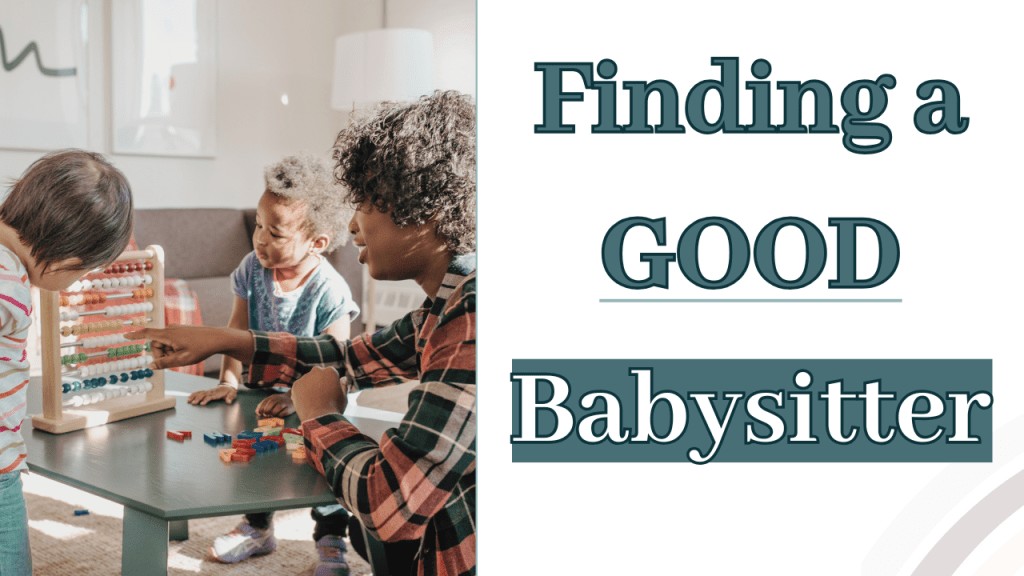
Emotional Fit and Parenting Style Alignment
When we are looking for a babysitter to be with our toddlers for any amount of time while we are not present, we should make sure that the babysitter is able to handle our unique toddler’s temperament and the challenging behaviors that sometimes come.
Heather’s Story: Not the Right Match
What she needed: When Heather was looking for a babysitter for the first time, she was feeling burnt out between running her business from home and caring for her three year old twin boys. She wanted someone who could help out during the day and during the transition to dinner and bedtime (always a chaotic time).
What she learned: The first babysitter Heather went with was a mother, had a lot of experience, was willing to help for long periods of time, and her cost was lower than most. But after the first few times she came to babysit, Heather noticed that this babysitter, while she looked great on paper, was not the right fit for her boys, especially her strong willed toddler. Before this point, Heather had not fully realized that her twins were more strong willed, but after observing interactions with the babysitter and her sons, she saw that more clearly.
Not a good fit: This first babysitter mentioned that she too had a strong willed child and felt triggered by Heather’s twins. Their resistance and fierce independence were frustrating for her to deal with. Heather also noticed that her sons seemed to sense that the babysitter was frustrated and trying to control them, which made them uncomfortable and resist her more. Even after a few days of trying, Heather still had to be present with them and the babysitter for her twins to be comfortable. As soon as she tried to leave they would scream and cry. The situation was not working for anyone.
Something to look out for: Heather noticed that this first babysitter did not invite her toddlers into play to help them transition away from her, but rather just seemed to be pulling them away from their mom. This did not work at all because the more she tried to force them to go with her the more they pulled away. Heather shares more about how effective using playfulness is with toddlers who need to transition from parent to caregiver, even when it’s just parallel play, in this post about separation anxiety if you need more tips.
Sadly, Heather’s twins never warmed to that particular babysitter. The relationship felt forced, they fought it, and they felt abandoned. Heather had to go back to the drawing board, but she took what she had learned from this experience to help her find the right fit babysitter and have a better experience from the start.
Finding the Right Fit Babysitter
Tip #1: Ask In Depth Interview Questions
Knowing that finding a babysitter who is an emotional fit for your child is important, we can ask interview questions relating to what the babysitter’s temperament is and how they would react to our toddler’s temperament and behavior. Also, if they are a parent, we can ask questions about their own parenting style and see if it mostly aligns with our own.
EXAMPLES
- Are you generally calm and regulated?
- What behaviors are hard for you?
- How do you manage tough moments?
- How would you react if my toddler says “no” to you and is refusing to listen?
- What would you do if my toddler is throwing a toy or having a tantrum?
If the babysitter isn’t sure how they would react but they ask what we would want them to do, we can tell them and see what their reaction is, if they think they will be able to follow through in that way or not, or have any good ideas to add.
EXAMPLE
- You have found a great babysitter that aligns with most of your values, the only thing you are not on the same page on is timeouts. This babysitter used timeouts with her children, but you do not think they are very helpful and instead do time-ins. Will they be able to respect your parenting style? Are they willing to learn something new? Or are they only comfortable using the methods they know?
- If a babysitter, or even family member or friend, is willing to learn something new, Heather highly recommends the book No-Drama Discipline by Dr. Daniel Siegel and Tina Payne Bryson as a tool to open up conversations and set expectations with those watching your child when parenting styles don’t line up on positive discipline methods.
Tip #2: Consider the Duration and Timing of Babysitting
We want to make sure to consider how long the babysitter will be there and if our toddlers can handle that amount of time. The length of time, especially at first, can matter a lot.
Heather regrets having her twins first experience with a babysitter be for such a long period of time. Going from being at home with mom most of the day to having a babysitter for six hours was too big of a transition for them.
The important thing here is that we know what our toddlers can handle. If our toddlers are in daycare or preschool and are used to being away from us for longer amounts of time, six hours might not be too much for them. But if they are mostly at home with us and are not used to being separated, we should start with smaller amounts of time and work our way up.
Tip #3: Find Things that Ease Transitions
EXAMPLES
- Another child to play with: When Heather finally found a good fit babysitter, the babysitter had a child of her own that she brought with her. Heather noticed that having the other child present actually eased her toddlers’ separation anxiety, making the transition away from her easier. For her twins, the time with the babysitter seemed to feel more like a play date. This positive play interaction can also happen with a babysitter who watches another child at the same time too.
- Transition rituals to ease separation: Routines that prepare our toddlers ahead of time can really help ease separation anxiety, such as talking with your toddler the day before about a babysitter coming, having a visual schedule where they can see what happens when in their day, or a visual timer so when you say the babysitter is coming in 30 minutes they can see that time on the timer. We can also have rituals right when we need to leave that can add in a little fun, like a silly handshake, a hug countdown, or waving and blowing kisses out the window.
Other Things to Consider
- Different times of struggle: Sometimes toddlers won’t seem to have a hard time when we leave, but instead have a tough time when we come back. When Heather returns, her twins have always had a hard time right after where their emotions run high. Even though it can be alarming, it is very normal for our toddlers to be dysregulated like this after reuniting with us. When they are away from us, they tend to hold in their emotions until they feel safe to let them out again. We are that safe place for them to cry into. What we can do is offer comfort and support and know that they will regulate again when they have gotten those emotions out of their system.
- Pricing: When we are looking for babysitters, we need to know what price ranges work for us. Are we flexible? When babysitters price themselves higher, they do typically have more value and experience to bring. Heather’s first sitter was the one at the lowest price while the better fit babysitter was more expensive. From her experience, Heather found that she would rather pay for a high quality babysitter for less time than one that’s not a good fit for more time.
- Transportation: Do we want the babysitter driving our toddlers to special activities? Or is there a park nearby and they can take the stroller or wagon? What are we comfortable with?
- CPR training: A babysitter who has CPR training or other emergency response training can be very valuable.
- Experience with special needs: If your child is neurodivergent, do they have experience with those unique challenges? With her own background and experience as a special education teacher, whenever Heather hears of a babysitter that has experience with neurodivergent children, she has more confidence in them because she knows what it takes to care for children with those challenges.
- Caveat: However, we do have to be careful if we see “experience with special needs” being pushed on a resume because, unfortunately, not every person who works in that field is drawn to it for the right reasons. Just because they have experience with neurodivergent children doesn’t mean they will be a great babysitter, so we still do need to be discerning.
- Facebook babysitting group vs. babysitting websites: Heather had better luck on a local babysitting Facebook group vs. the babysitting websites just for sitters.
- Go with your gut: If someone just seems off, even if they have all the credentials and answered all the questions correctly, listen to your gut. Don’t just go with someone for convenience because that might backfire like it did in Heather’s first babysitting experience. Do what is right for your family. When you finally find the right person who just gets your child, everything really does change for the better. You feel like you have your time back, your kids are happy, and there is value being added to your family.
So hang in there, the right fit babysitter is out there!
And, as always, if you find yourself needing more parenting tools and support, sign up for the free Transform Aggressive Toddler Behavior and Tantrums Guide and Workshop here!

Hi! I’m Dabney, mom to three boys in three years! I found Heather through her podcast while searching for tools to help my own toddler’s aggressive outbursts and button pushing behaviors. Few voices in the parenting world address how to manage the intensity of these toddler behaviors when you have not just one but two or more children with you.
Enter Heather, an educator for ten years turned twin mom of two boys with stories and strategies that highlighted how to manage these hard moments while also being outnumbered. I participated in her Transform Aggressive Toddler Behavior and Tantrums Workshop and Cohort and found her strategies simple and effective. Not only is my parenting better for it, but I am growing in my confidence along this journey collecting tools along the way.
 Toddler Toolkit