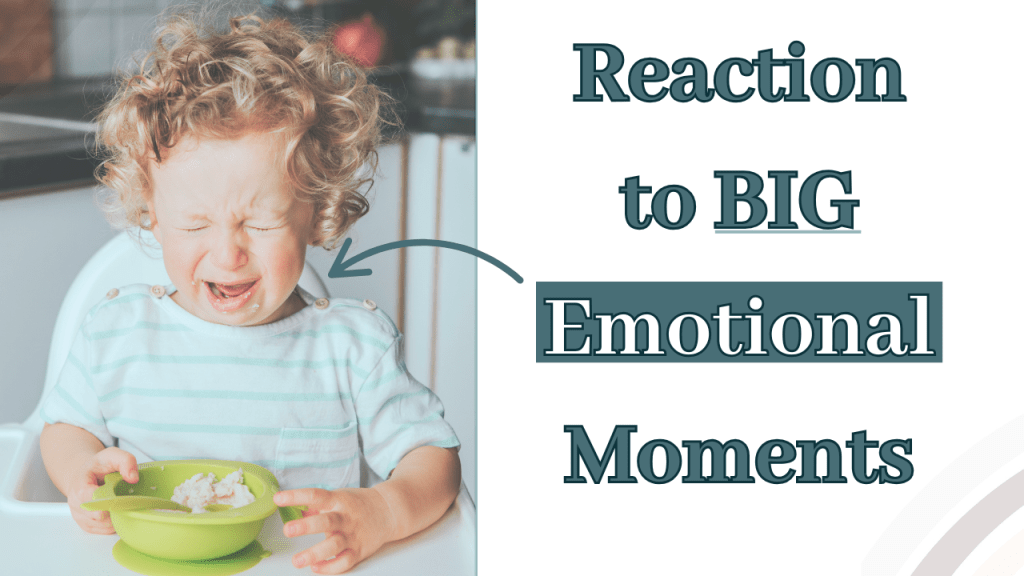
It’s no secret that toddlers have big emotions. The screaming, crying, fighting, and tantrums can be so tough for parents and caregivers to endure and we might want to just make it stop sometimes. But if we consistently try to shut our toddler’s emotions down with shame and frustration, we could be showing them that their emotions are not safe with us, and that they need to either suppress their emotions or ignore them entirely. This can lead to children who have unhealthy relationships with themselves and with others as they grow.
But what if we can re-frame even our toddler’s toughest emotional moments and respond in ways that will not only help them move through the emotions in the moment, but will also give them the tools they need to grow into adults who can have healthy relationships, set boundaries, and understand themselves?
Heather shows us how this is possible. Instead of sowing seeds of shame, we can build that emotional resilience now and gain more peace in our parenting.
In this post you will find:
- Why we don’t need to parent perfectly for growth to happen
- Why our toddlers big emotional moments are actually developmentally appropriate
- What happens when children are shushed or shamed
- How avoidant and anxious coping styles start early
- Tips to create emotional safety so children don’t have to shut down
**Listen to the full podcast episode here or read on for the tips!
Shift 1: It’s Not about Being a Perfect Parent
The journey of building emotional safety and resilience in our children does not depend on us being perfect parents. There is no such thing as perfection in parenting, so the first thing we need to do is take that weight off of our shoulders.
Parenting is a journey where we grow with our children. We don’t need to get every response right. Instead we should focus on our overall relationship with our child and do our best to show up with curiosity and connection. One way to do this practically is to practice taking a pause before we react. Before we judge our child’s big emotional moments, we can take a moment to ask ourselves some questions:
- What does this emotion mean to my child?
- How can I help them?
- What do they need from me right now?
These simple questions can shift us from reacting to wondering, from correction to connection, turning even the most emotional moments into opportunities to grow our relationship with our child. Small habits like this, and others (like remembering to greet our children warmly, breathing, or validating their feelings) can have a big impact over time. These micro habits build a foundation of trust, safety, and healthy coping skills for our child.
Shift 2: Big Emotions Are Not Bad Behavior
Toddlers feel emotions so intensely because they actually have an underdeveloped prefrontal cortex, which is the part of the brain in charge of planning, impulse control, emotional regulation, and understanding consequences. This is why expecting a two year old to stop mid tantrum because we told them to does not work. It’s like asking them to do calculus.
Our toddlers’ low impulse control is actually developmentally appropriate because they don’t have the wiring for it yet. They are like a car that can accelerate, but has no brakes. This is why toddlers will hit or throw a toy at a sibling even after we just told them not to. It’s not defiance, it’s an emotional immature nervous system not having the ability to stop on its own.
When we remember that toddlers’ brains are still under construction it’s easier to lead with empathy. Even as adults it can be hard for us to control our emotions, so how much harder must it be for our toddlers! Because their own lack of control can be scary for our toddlers, what they really need from us in these moments is our calm presence to help them calm down again. This is called co-regulation, which is a fancy way of saying that toddlers need to borrow our regulation when they don’t have their own.
So our slow breathing, our calm tone, our comforting presence all send the message that our child is safe, that we are there, and that we can handle their big emotions. Over time, repeated co-regulation builds pathways for self-regulation so our children can eventually regulate emotions on their own.
Even if we struggle with a calm presence, available presence matters. This means we are still there, even if we sometimes get frustrated or overwhelmed. We are showing up and staying engaged instead of shutting down. This might sounds like,
- “I’m feeling frustrated too. We’re going to figure this out together. I’m here with you, even though this is really hard.”
It’s important to stay present, even from afar, even if it’s imperfect, because emotions that get shut down, ignored, or dismissed lead to deeper issues.
Shift 3: Understanding What Happens When Emotions Are Shut Down
When caregivers say, “Stop crying. You’re fine,” children learn their feelings are inconvenient and suppress them instead of learning to label them and express them in healthy ways. In research, putting feelings into words is called affect labeling. When we are able to label our emotions, studies show that it actually decreases the intensity of our experiences and reduces emotional distress by decreasing activity in the brain’s emotional centers.
If we instead suppress our emotions, our emotional energy becomes trapped in our bodies, leading to negative symptoms like muscle tension, pain, and other ailments. This suppression can also shows itself in relationships where the one not able to label their emotions and their experiences is unable to pinpoint what is bothering them about a situation and so deflects and becomes avoidant. This might sound like:
- “I don’t know why I’m upset. Nothing’s wrong. It’s fine.”
- Or, “I can’t think of any examples, it’s just something you do that bothers me. I don’t know what it is.”
This avoidance stems from ignoring their emotions for so long that they don’t understand themselves or others. The emotional charge is still there, its just bottled up and unprocessed, so it instead explodes, going from 0 to 100 over little things. This person might also swing from clinging in a relationship to withdrawing with no explanation. This inability to process and verbalize emotions affects friendships, marriages, and even parent child relationships.
Shift 4: Identifying the Roots of Avoidant and Anxious Coping
The ways that we respond to stress and connection in adulthood often have roots in our early experiences with caregivers. How we were comforted or not comforted as children shapes how we relate to our own emotions and to others, leading to the formation of different types of attachment styles, either anxious, avoidant, secure, or disorganized.
- A disclaimer: We might see some of the tendencies bellow in ourselves and in our children, but that does not mean that our identities are in these attachment styles. While it is good to be self-aware of our own tendencies and the tendencies of others, it is important to not define ourselves or others by these labels. We can all change and grow. Self-awareness is often the first step.
Avoidant Coping
If caregivers are consistently distant, dismissive, or critical, this may lead to a child who develops avoidant coping strategies. They may become detached when upset, telling themselves they don’t need anyone. This may look like independence, but it is really a protective wall as they have learned it’s safer to shut down their need for support than to risk rejection.
As they grow into adults who only know how to push emotions away, they cope with the built up stress by escaping into distraction or denial, numbing their feelings with substances and risking falling into addictions. They keep their emotional distance from others by pulling away as a way to avoid disappointment.
Anxious Coping
On the other side of the spectrum, a child can develop anxious coping strategies when care giving is inconsistent. Sometimes the parent might be warm and supportive, but other times they are critical and have explosive behavior. This unpredictability creates confusion and children internalize the lesson that love is not always available and could be withdrawn without warning. They may fear being abandoned and panic over small corrections, falling into the trap of perfectionism.
As an anxious child grows, they might feel like they have to be super attuned to other people’s reactions, always seeking the reassurance and validation of others. They might constantly people please, trying to keep everyone else happy at the expense of their own needs just to avoid conflict. People with anxious attachment might also feel the need to over explain themselves because they never felt fully heard or believed.
Tips to Create Emotional Safety
So what can we do to create emotional safety in our homes? Here are some simple yet powerful tips to get us started.
Tip #1: Co-regulation before Correction
Before we correct our children’s behavior, it is important to connect with them first so that they feel seen and understood. Co-regulation is part of that process because our presence can help our children calm down and actually be able to hear what we need to say. Communicating our presence might sound like,
- “I’m here.”
- “I hear you are upset. You’re safe.”
- “You are allowed to feel that way.”
Tip #2: Label Emotions to Control Them
Dr. Dan Siegel calls this strategy “name it to tame it” because just by labeling emotions we gain more control over them. Doing this for our toddlers can sound like saying,
- “That was scary.”
- “You’re frustrated because you wanted to keep playing.”
Tip #3: Normalize Big Emotions and have Proactive Conversations
We need to remind ourselves that all emotions are normal and okay, but all behaviors are not. It’s okay for our child to be mad that their sibling took their toy, but it is not okay for them to hit when they are mad. So when we see that our child’s behavior is not acceptable, it is important to have conversations where we address it when they are calm. Our goal is not to take their feelings away, but to teach them to make better decisions and cope in healthier ways next time. This can sound like,
- “It’s okay to feel angry, but its not okay to hit.”
- “Let’s talk about what to do next time.”
Tip #4: Pause before Reacting
Use the pause and question strategy before reacting. We can ask ourselves what our child is feeling, why, and what do they need from us? This helps us shift from reactivity to compassion and empathy.
Tip #5: Start Small
We don’t have to overhaul our whole parenting approach overnight. We can pick one small thing to try and go from there. The shift could be as simple as focusing on taking a deep breath before responding, or narrating what our child is feeling when they are upset. Even these small steps will have a big impact.
Tip #6: Repair after Tough Moments
When we do lose your cool, because we all do, we can go back and repair with our child. This may sound like, “I was feeling frustrated. I yelled, and that wasn’t okay. I’m sorry.” This models accountability and emotional safety.
Tip #7: Celebrate the Micro Wins
It is important that we notice and appreciate the little moments we did stay present, even if we weren’t perfectly calm the whole time. Progress over perfection.
Tip #8: Practice Self Compassion
We should talk to ourselves the way we would talk to a friend. We tend to be harder on ourselves than we are on others. But our children see the way we treat ourselves. We want to show them that it’s okay to make mistakes, that we don’t have to be perfect, and that we will keep showing up and trying. That in itself is a huge lesson to our children about how to treat ourselves and others.
As we reflect on all these insights and tips, we can ask ourselves, “How did the adults in our lives respond to our emotions growing up?” and “What do we want to do differently for our children?” We can create a safe and loving environment, even if we aren’t perfect, even if we are still growing, because even small steps can make a big impact.
If you’re struggling with toddler tantrums and behaviors like hitting and not listening, I have a free guide for you! It’s called the Tantrum and Behavior Guide: 7 Toddler Struggles and How to Solve Them Fast. Sign up for it here!

Hi! I’m Dabney, mom to three boys in three years! I found Heather through her podcast while searching for tools to help my own toddler’s aggressive outbursts and button pushing behaviors. Few voices in the parenting world address how to manage the intensity of these toddler behaviors when you have not just one but two or more children with you.
Enter Heather, an educator for ten years turned twin mom of two boys with stories and strategies that highlighted how to manage these hard moments while also being outnumbered. I participated in her Happy Toddler, Confident Parent Cohort and found her strategies simple and effective. Not only is my parenting better for it, but I am growing in my confidence along this journey collecting more tools along the way!
 Toddler Toolkit