Have you ever told your upset toddler to calm down only for them to scream louder? Or maybe you’ve said, “Stop crying!” but then their crying just doubles in volume. In these moments we can feel overstimulated, frustrated, and out of control ourselves. We’ve all been there.
Sometimes we get stuck saying things that we know won’t work because we don’t know what else to say. We are simply using the language that was used on us growing up, what Heather calls control language. But Heather wants to show us how to flip the script and find phrases that keep us grounded and actually help our toddler through a meltdown.
In this post you will learn:
- Why control language backfires
- Why connection language is important
- 12 helpful phrases to use instead
- Encouragement for when we feel we miss the mark
**Listen to the full podcast episode here or read on for the tips!
Control Language and Why it Backfires
Control language is a set of phrases many of us default to under stress, often commands, dismissals, threats, and even bribes. We tend to use them in more reactive ways, when we want to shut behavior down quickly because it’s inconvenient or because our buttons are being pushed. The problem is that control language often escalates instead of deescalates the behavior. Our toddlers ramp up instead of calming down because they can feel unsafe, unheard, out of control, and shamed, leading to potential breakdown in our relationship with them overtime.
So why does control language backfire? When our goal is to stop behavior as quickly as possible and we are jumping in with our own frustrated energy, we are adding more stress to the situation, which doesn’t help anyone calm down. When our toddlers are in the middle of a meltdown, it’s not a matter of them deciding not to listen to us, it’s that they physically can’t because their whole system is offline and their body is reacting in fight or flight.
When it comes to meltdowns, the best way to actually help our toddlers move through them is to let go of control language, let go of our goal to stop it as quickly as possible, and move forward with connection language with the goal of supporting our child’s emotional regulation. Bringing our toddlers back to a calm, regulated state should be our goal, and only when that happens will they be able to hear us, reengage self-control, and learn how to handle the situation better next time.
The Importance of Connection Language
Connection language acknowledges the emotions our toddlers are feeling, provides a place of safety, and helps them co-regulate to return to calm. Connecting like this doesn’t mean we let our toddlers get whatever they want just to end the tears. That would be permissive parenting. Our goal shouldn’t be to stop the emotion immediately, either through demanding they stop or by trying to bribe them to.
Our goal is to help them through the storm to the other side, showing them how the winds of emotions come and go, but they are safe, they can get through it and be okay again. No threats, no bribes, just comfort and connection. When we replace control strategies (based in shame, blame, judgment, and guilt) with connection strategies, we are setting the foundation for a much healthier relationship with our children as they grow.
12 Connecting Phrases to Replace Control Language
Because keeping our calm in our toddlers’ meltdown moments and remembering to connect is easier said than done (I know), Heather has identified 12 control phrases that we tend to use and how we can swap them out in favor of connection language. We don’t have to use all 12 swaps exactly, and if the wording doesn’t sound natural to us, we can always tweak it, but even just changing one often used phrase can make a difference as we move from control to connection.
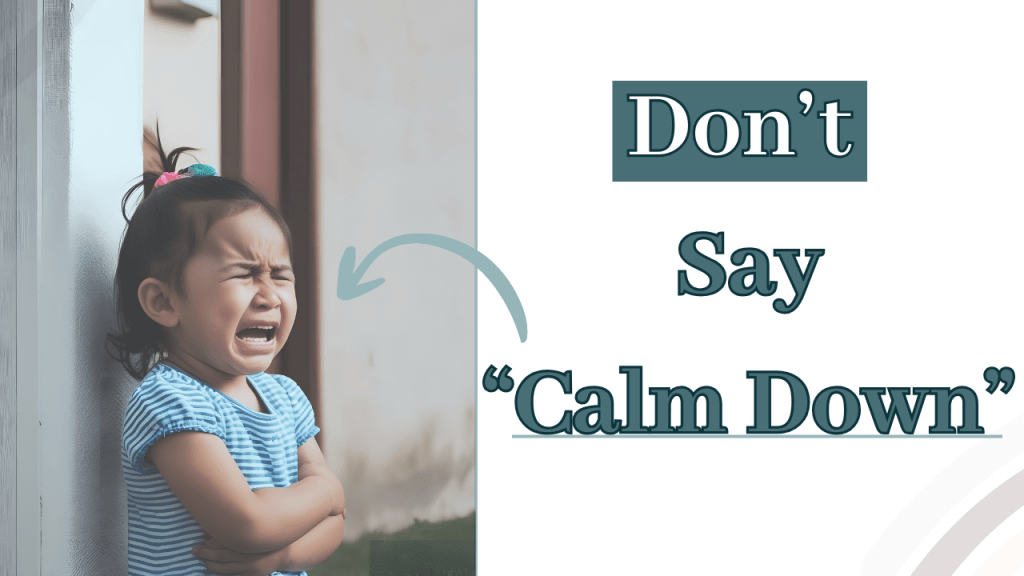
1. Calm Down – “I’ll stay with you while your body calms.”
We want our toddlers to know that they can calm down, but when we demand calm, that’s putting the pressure of control and our own frustration onto them. If instead we first acknowledge what our child is feeling and then assure them we are there to help, they will feel more free and safe to actually let their bodies come down from their heightened state.
#2. Stop Crying – “It seems like your tears need to come out right now.”
If that doesn’t sound like something you would say, you can also try, “You really feel like you need to cry,” or “Your body is so upset. I’m here for you.” The goal is to change our language from telling them what we don’t want them to do to acknowledging that their body is going through something and that we are there to help them get to the other side.
#3. You’re Fine – “I understand you’re upset. You’re safe now, right?”
It’s not very fair to tell someone how they feel. To our toddler, hearing “you’re fine” might sound dismissive when they really are feeling overwhelmed with big emotions they don’t understand. Instead we can name the emotions we see, assure them they are safe, and ask if they are OK.
#4. Don’t You Dare – “I won’t let you hurt me or hurt others. I’ll keep us safe.”
Saying “don’t you dare” is almost like poking a bear: instead of helping them to stop and think about what they are about to do, it fuels their fire to double down. Especially for strong willed toddlers, this phrase can sound like an invitation to engage in a power struggle. But if we simply state what we are doing to keep everyone safe, we decrease the likelihood of triggering pushback.
#5. Why are You Acting like This? – “Something feels really big inside you right now.”
Saying this really places the blame on the child when the same question could be asked of us too, and if our children are a bit older they might even turn that question back to us in the heat of the moment. Fundamentally, our children meltdown because they have immature emotional regulation and are learning. We should be there to help them through their struggle, not shaming or blaming them for it.
#6. Knock it Off Right Now – “Your body is not ready to stop yet so I’ll help you.”
This can be a tough switch for us, especially if our child is hurting a sibling and it just pushes all our buttons and sends us over the edge. But when we come at our child with control language, it really is telling them that they are in control, not us. We should instead focus on what we can do and what we can control: ourselves (“I’ll help you stop/I won’t let you”).
#7. Your Being Ridiculous – “Your feelings feel huge right now.”
Instead of judging our toddlers’ reactions, which can be shaming, we can simply acknowledge how they feel.
#8. If You Don’t Stop Crying We’re Leaving – “We’ll go when your body’s ready.”
It can be easy to threaten our children with leaving because of their behavior, especially when we are out in public. The reality is that sometimes our child does need to be taken to a quiet, calming space away from others to calm down, but threatening to do so usually just makes their emotions ramp up faster. Instead we can state the fact and do what we need to do when we know its time.
#9. Big Kids Don’t Cry – “Even big kids and adults have big emotions too. It’s OK.”
This is just an untrue statement that we might have been told, but of course big kids cry sometimes, and adults too. We all get overwhelmed by our emotions at times. It’s normal. We can assure our toddlers that emotions come and go, that we get through them, and they can too.
#10. Because I Said So – “I hear that you want that. My job is to keep you safe, so the answer is no.”
We often say this when we just want our child to do as we say and are tired of giving them explanations. But even when we have nothing more to say on a matter, we can still acknowledge them so they know they are seen and heard, even when we still need to say no.
#11. Don’t Be Mad – “It’s OK to feel mad. I’ll help you handle it” or “That’s not safe. Let’s get our mad out better way.”
Telling someone else to not have the feeling they are clearly having just isn’t helpful or fair. We want to instead show them what to do when they feel mad, because the problem isn’t feeling mad, its hurting others when we are mad. We should think of better ways to handle mad feelings that we can teach our toddlers instead of just trying to shut down their feeling and their need to express it.
#12. Quit Whining – “Try that again using your strong voice.”
It’s not very helpful when we just tell our child what not to do. Instead we should focus on teaching them what to do instead, which might sound like modeling for them what a calm voice sounds like and having them copy us
When We Feel Like We Miss the Mark
These are just 12 examples of how we can shift our language from control, blame, shame, judgment, or guilt to connection that can strengthen our relationships with our children. At the end of the day, though, we are all human and aren’t going to be perfect. Control phrases are going to fly out sometimes when we get triggered, frustrated, or angry. Sometimes I will catch myself mid-sentence and try and stop myself. But even just becoming aware of our control language can be a win, just like stopping ourselves, or going to our child and apologizing after we said something we later regretted.
So we don’t have to be perfect. Even small wins and repairs build trust overtime as we grow and learn right alongside our children. We deepen our relationship and trust with them just by being honest about our own human experience and having grace for theirs.
If you’re struggling with toddler tantrums and behaviors like hitting and not listening, I have a free guide for you! It’s called the Tantrum and Behavior Guide: 7 Toddler Struggles and How to Solve Them Fast. Sign up for it here!

Hi! I’m Dabney, mom to three boys in three years! I found Heather through her podcast while searching for tools to help my own toddler’s aggressive outbursts and button pushing behaviors. Few voices in the parenting world address how to manage the intensity of these toddler behaviors when you have not just one but two or more children with you.
Enter Heather, an educator for ten years turned twin mom of two boys with stories and strategies that highlighted how to manage these hard moments while also being outnumbered. I participated in her Happy Toddler, Confident Parent Cohort and found her strategies simple and effective. Not only is my parenting better for it, but I am growing in my confidence along this journey collecting more tools along the way!
 Toddler Toolkit